
Wash gently
Use mild detergent and avoid aggressive rubbing, twisting or long soaking unless the product instructions allow it.
Kaveri Libas Care Guide
Simple wash, dry, iron and storage guidance for the fabrics and garments you shop at Kaveri Libas.
A practical guide for everyday care of fabrics and garments sold by Kaveri Libas.
Start here
Use mild detergent and avoid aggressive rubbing, twisting or long soaking unless the product instructions allow it.

Dry in a well-ventilated area. Strong direct sunlight can affect some colours, prints and fibres over time.

Start with a lower iron temperature and increase only when suitable for the fibre, finish and embellishment.

Never pack damp garments. Clean, dry and breathable storage helps reduce odour, mildew and fabric damage.
Quick Care Finder
Tap a fabric or garment to jump straight to its care guide.
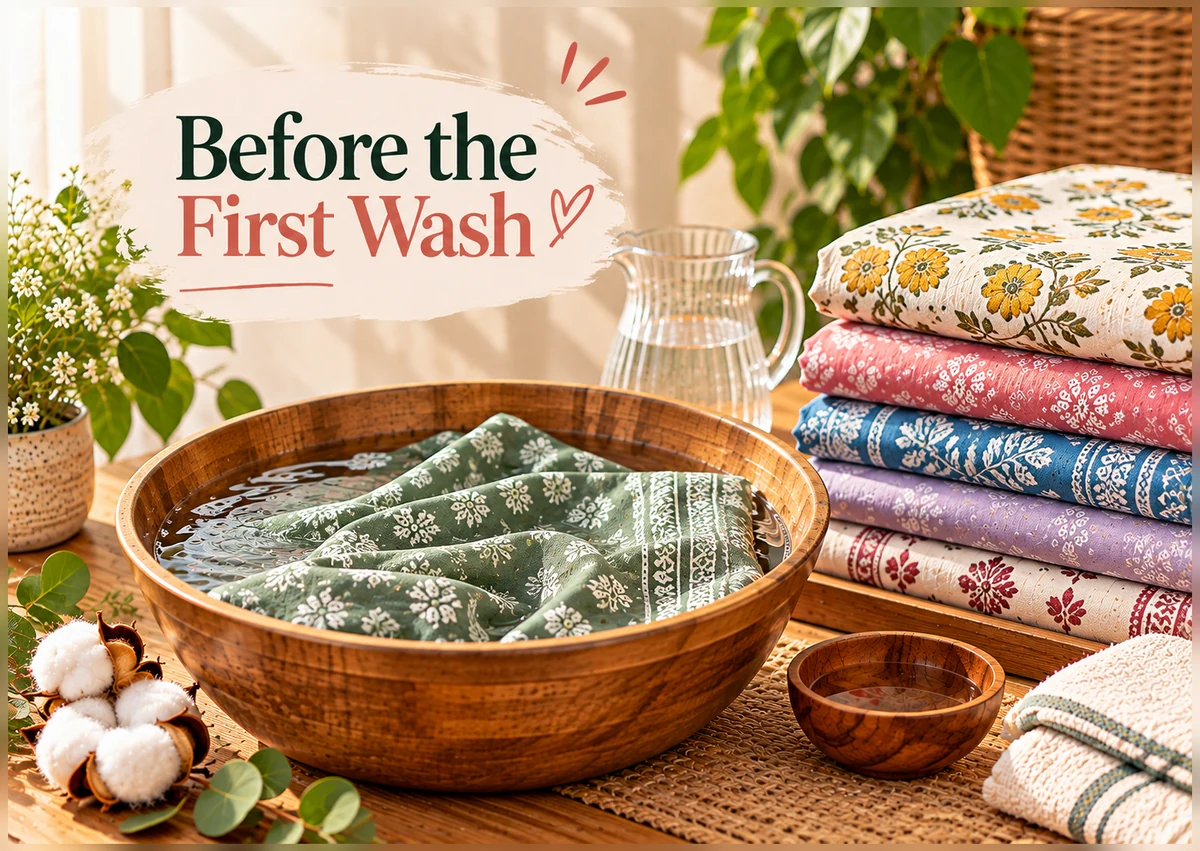
Before the first wash
Fabric-by-fabric
Simple, practical guidance for washing, drying, ironing and storing the fabrics we commonly sell.
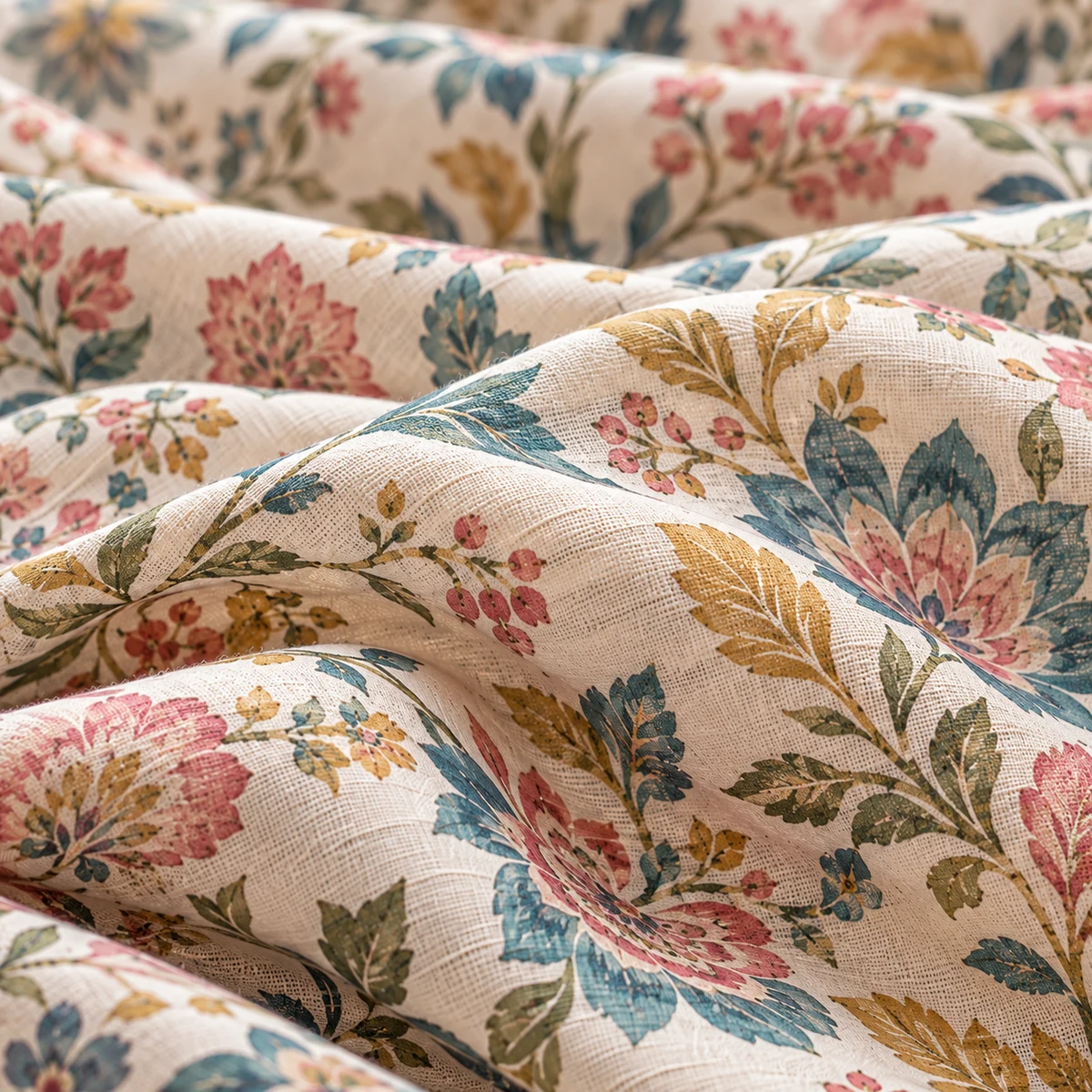
Everyday favourite
Breathable and easy to wear, cotton benefits from gentle washing and careful drying to help retain colour and shape.
Wash gently in cool or normal-temperature water with a mild detergent. Keep dark and light colours separate, and avoid long soaking or harsh rubbing.
Reshape gently and dry in shade or diffused light when possible. Avoid wringing the garment hard.
Iron on the reverse side when practical. Printed, dark or embellished areas may benefit from a protective cloth between fabric and iron.
Fold or hang only when fully dry. Allow airflow in wardrobes, especially during humid weather.
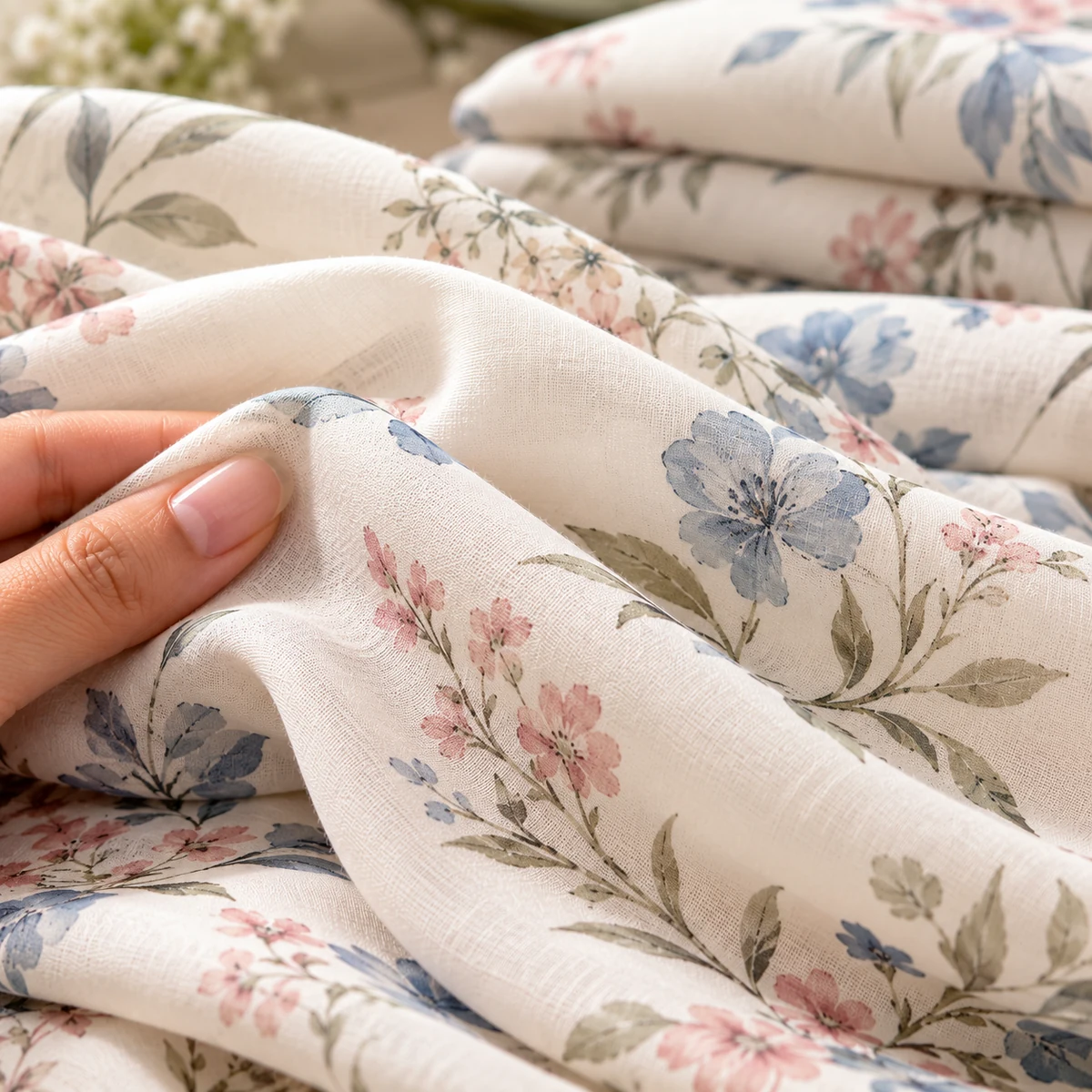
Natural fibre care
Natural cotton can relax or shrink depending on weave, finish and construction, especially around the first few washes.
For most washable pure-cotton fabrics, use cool or normal-temperature water and a mild detergent. Avoid very hot water, long soaking and strong twisting, especially during the first few washes.
Do not stretch wet fabric aggressively. Lay flat or hang evenly according to garment construction.
Cotton generally tolerates more heat than delicate fibres, but begin lower around prints, trims, embroidery and dark dyes.
Keep folded fabric clean and dry. Avoid long-term pressure from heavy stacks if the item has textured work.
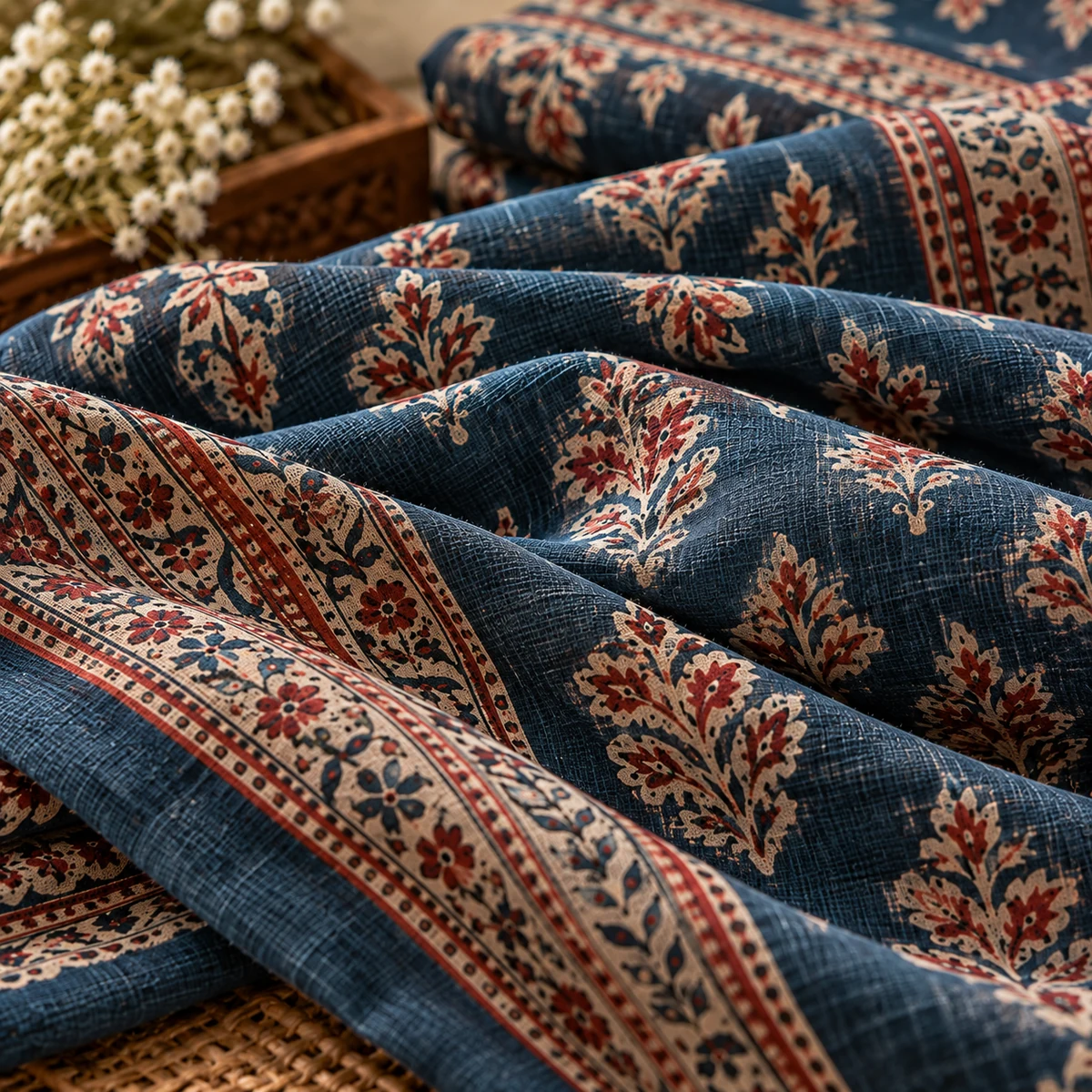
Light & comfortable
Because “South cotton” can include different weaves and finishes, treat the individual product instructions as the final authority.
Use a gentle wash with cool or normal-temperature water and mild detergent. Wash deep, contrasting or new colours separately during the first few washes.
Dry away from harsh midday sun when possible to help preserve colour.
Iron from the reverse side, especially around woven motifs, borders or prints.
Store in a clean, dry wardrobe and avoid packing before all moisture has evaporated.
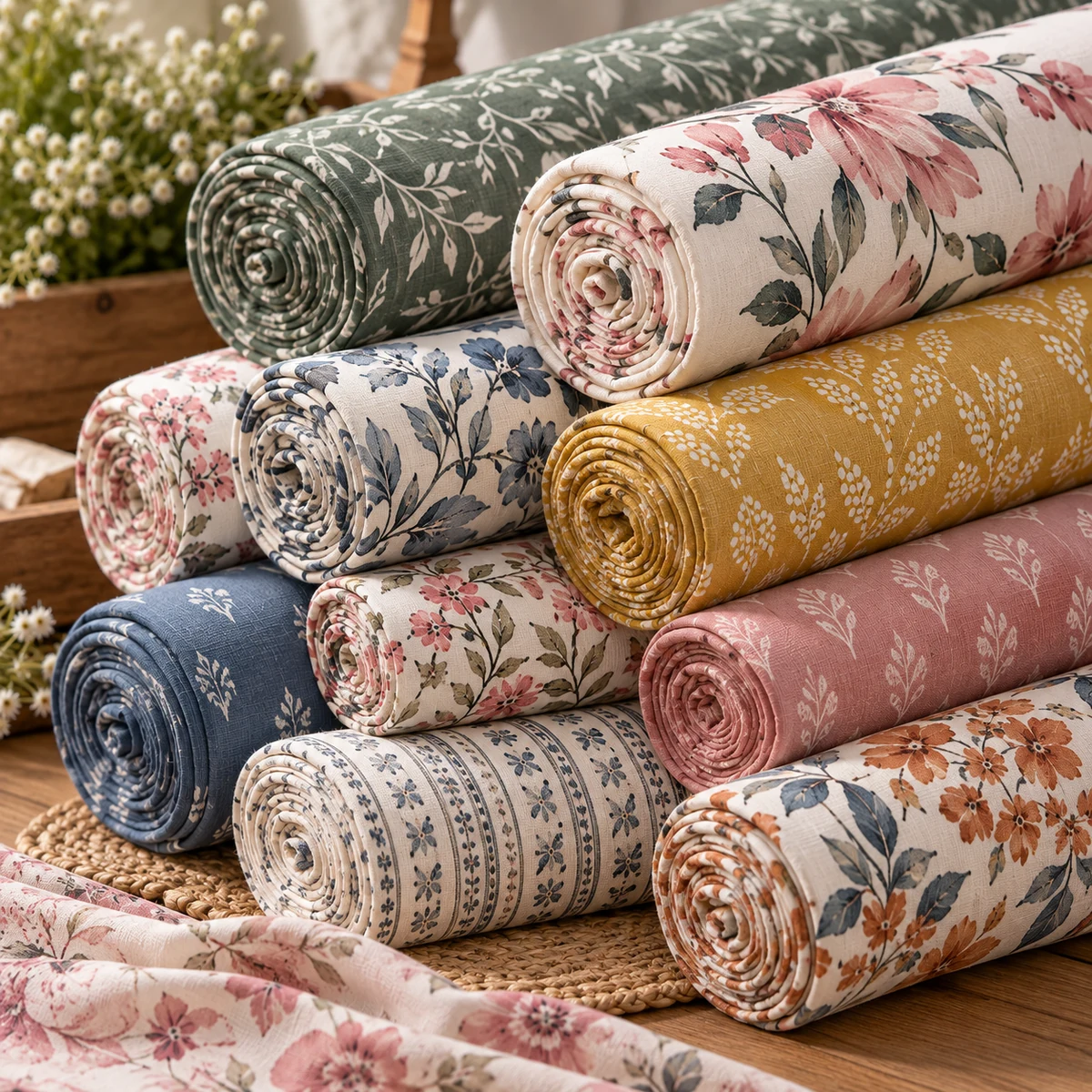
Before the tailor
Unstitched fabric needs a little extra attention because the first wash can affect how the fabric settles before cutting and stitching.
For washable cotton and similar unstitched fabrics, a plain-water pre-wash before stitching is a useful practice. Cotton can shrink slightly on the first wash, so this helps you see how the fabric settles before the tailor cuts it.
Soak or rinse gently in plain water without aggressive rubbing, wringing or long soaking, then let the fabric dry completely before giving it to your tailor.
Suit fabric, salwar fabric and dupatta may use different fibres or finishes. Care for each piece according to its own instructions.
Let the fabric dry fully and settle naturally before measuring or cutting. Some cotton fabrics may appear slightly contracted after washing and relax again after ironing, so judge the final size only after the fabric is completely dry and lightly ironed if suitable.
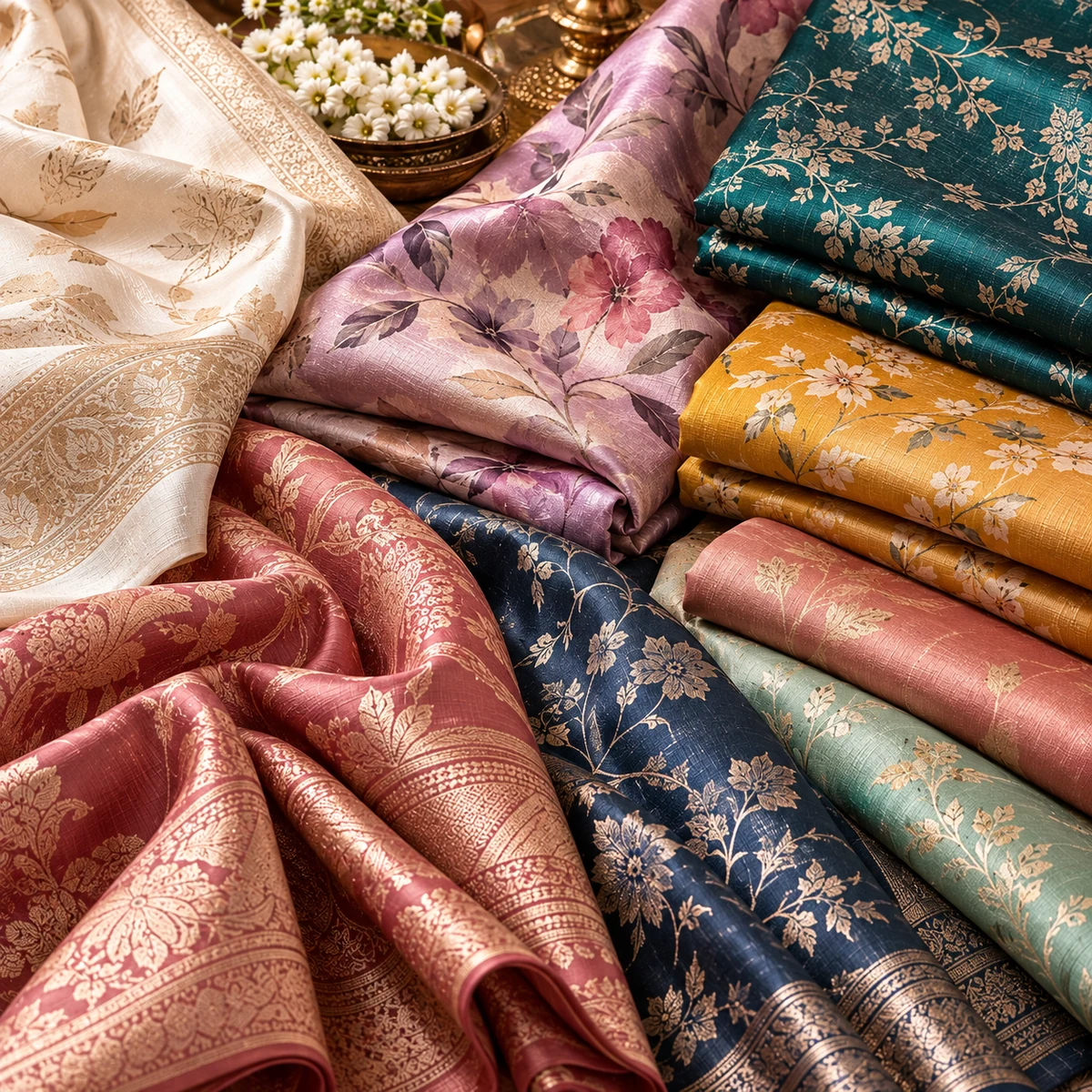
Delicate occasion wear
Silk and silk blends can react differently to water, heat and cleaning chemicals. Never assume one silk-care method works for every piece.
Silk and Maheshwari silk are best handled gently. Avoid routine machine washing, harsh detergent, long soaking and twisting. For heavier silk, zari or embellished pieces, professional dry cleaning is often the safer option.
If the specific product permits washing, avoid twisting and strong sun. Support the fabric while wet.
Use low heat and iron from the reverse side with a protective cloth. Avoid direct heat on zari, embellishment or delicate texture.
Store clean and completely dry. Fold delicate pieces with soft tissue or cotton cloth if needed and refold periodically.
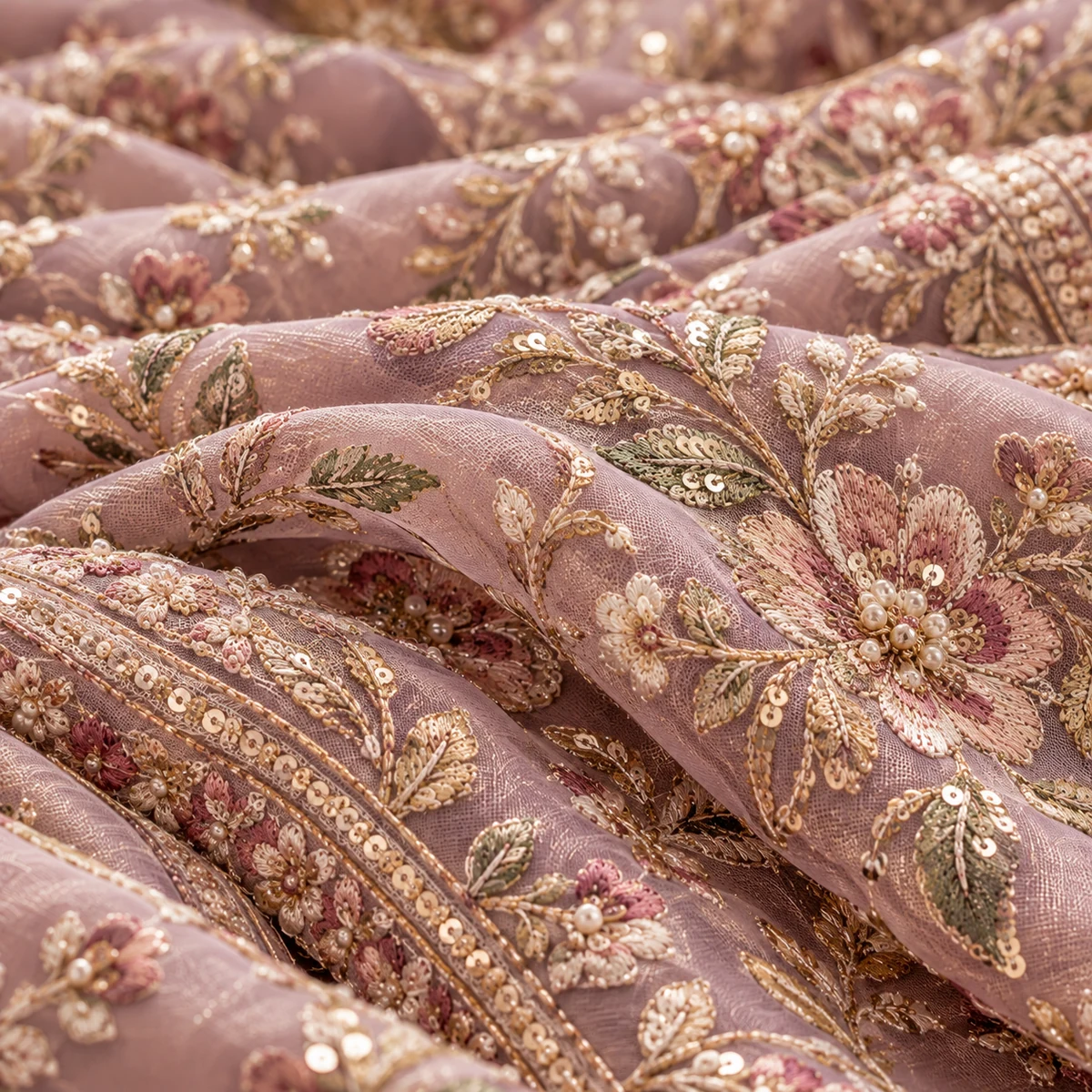
More detail, more care
Embroidery, sequins, lace, stones, zari and decorative trims can require more delicate handling than the base fabric itself.
Use the gentlest possible cleaning method. Avoid scrubbing, twisting or long soaking around embroidery, sequins, stones, zari, lace and decorative trims.
Support heavier wet garments so embellishment does not pull or distort the base fabric.
Never place a hot iron directly on sequins, stones, zari or heat-sensitive decoration. Use reverse-side pressing where suitable.
Fold carefully so hooks, stones and trims do not snag nearby fabric. Avoid heavy stacking on structured embroidery.
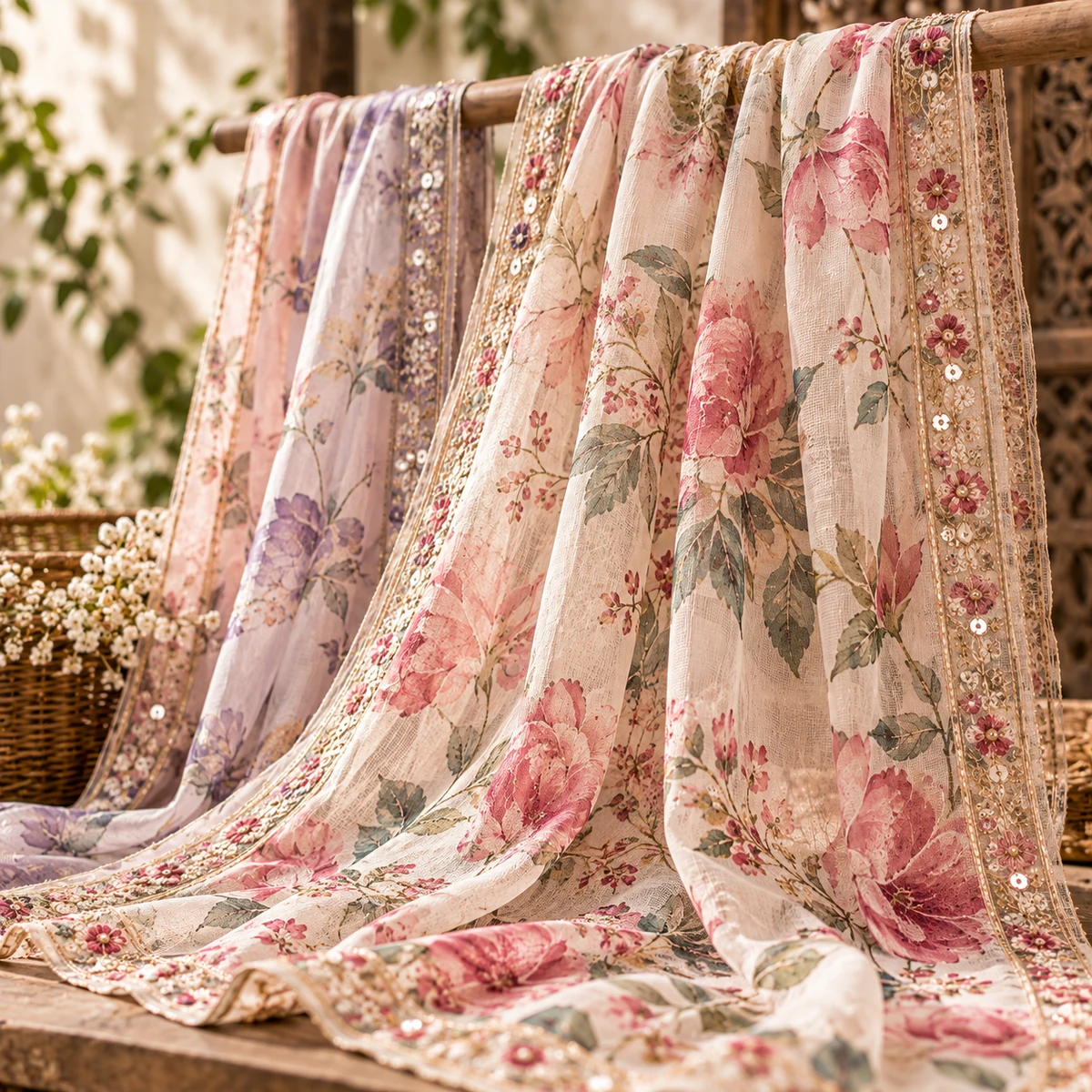
Often a different fabric
A dupatta may use a lighter or more delicate weave than the matching suit, so it should not automatically follow the same wash method.
Wash dupattas gently and separately when their colour, weave, border or embellishment differs from the suit. Lightweight fabrics need less rubbing and less soaking than heavier cotton pieces.
Avoid rough wringing. Support lightweight or embellished dupattas evenly while drying.
Use lower heat on delicate synthetic, silk-like, net or embellished materials.
Fold loosely and keep decorative borders from rubbing against fragile sections.
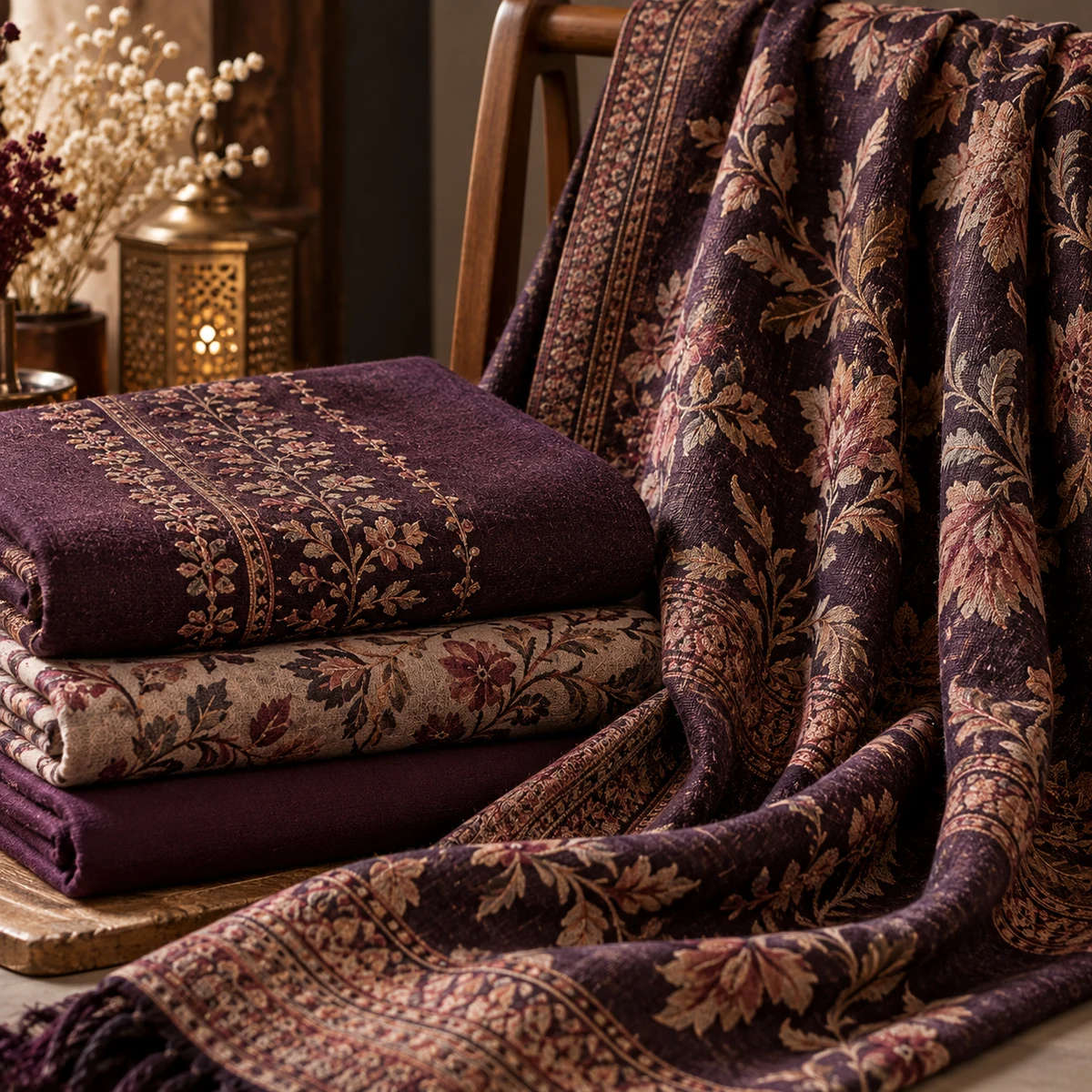
Seasonal storage matters
Warm fabrics benefit from gentle cleaning and completely dry storage before they are packed away for the season.
Use gentle cleaning suited to the fibre. Wool-rich, blended and decorative winter pieces should not be scrubbed, twisted or exposed to hot water; delicate shawls may be better professionally cleaned.
Avoid storing until absolutely dry. Some knits and wool-rich fabrics are better supported flat while drying.
Use lower heat and a pressing cloth for wool-rich or textured fabrics unless the label states otherwise.
Clean before seasonal storage, keep in a dry breathable space and avoid compressing delicate shawls for long periods.
Care SOS
Stop the wash, separate the item, rinse according to its instructions and avoid experimenting with harsh home remedies on delicate fabrics.
Blot rather than rub. Work from the outside of the stain inward and test any treatment on a hidden area first.
Use the lowest effective heat, iron inside-out where possible and place a clean pressing cloth over sensitive areas.
Store only clean, dry clothes. Refold delicate pieces periodically so the same crease does not remain under pressure for months.
The finishing routine
Good care does not end when the wash cycle does.
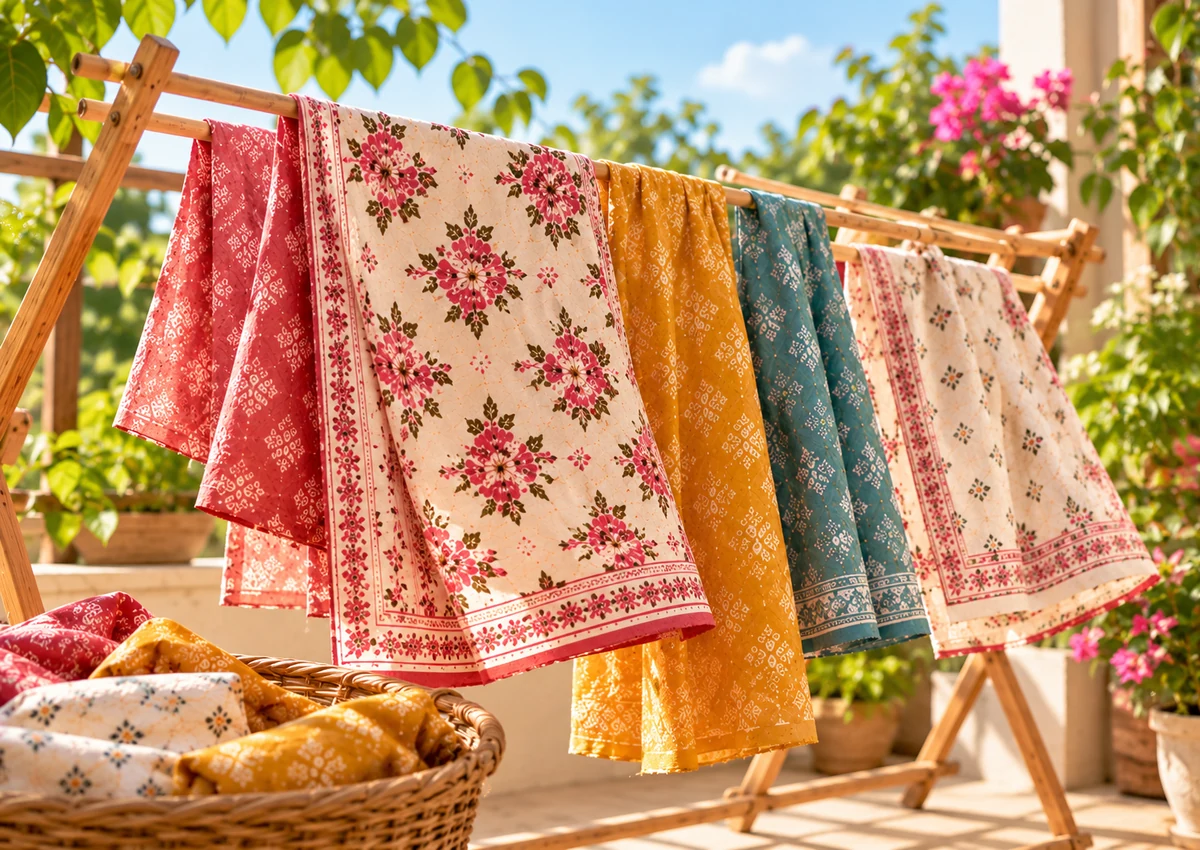
Avoid forceful wringing and uneven hanging that can pull fabric out of shape. Strong sun can affect some dyes and fibres.
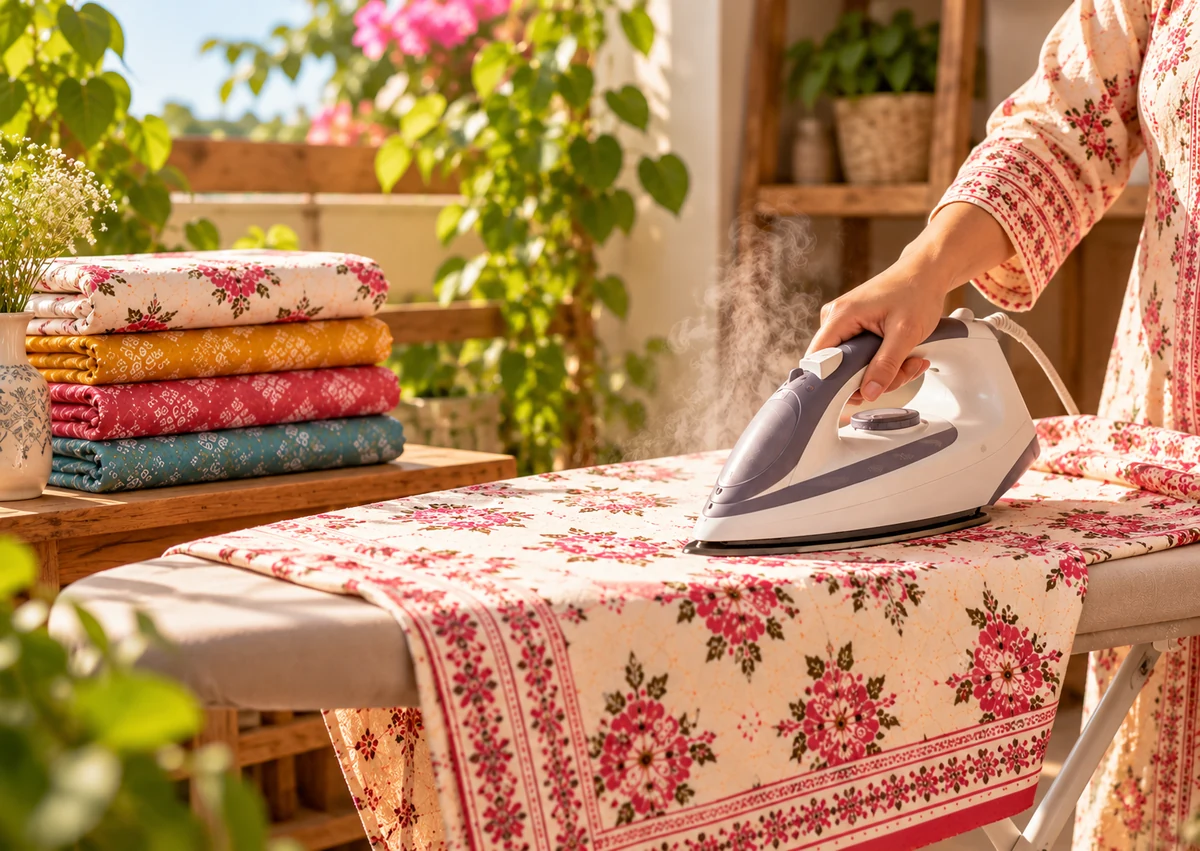
Start cooler and raise heat only if needed. Protect prints, dark shades and embellishment with reverse-side ironing or a pressing cloth.
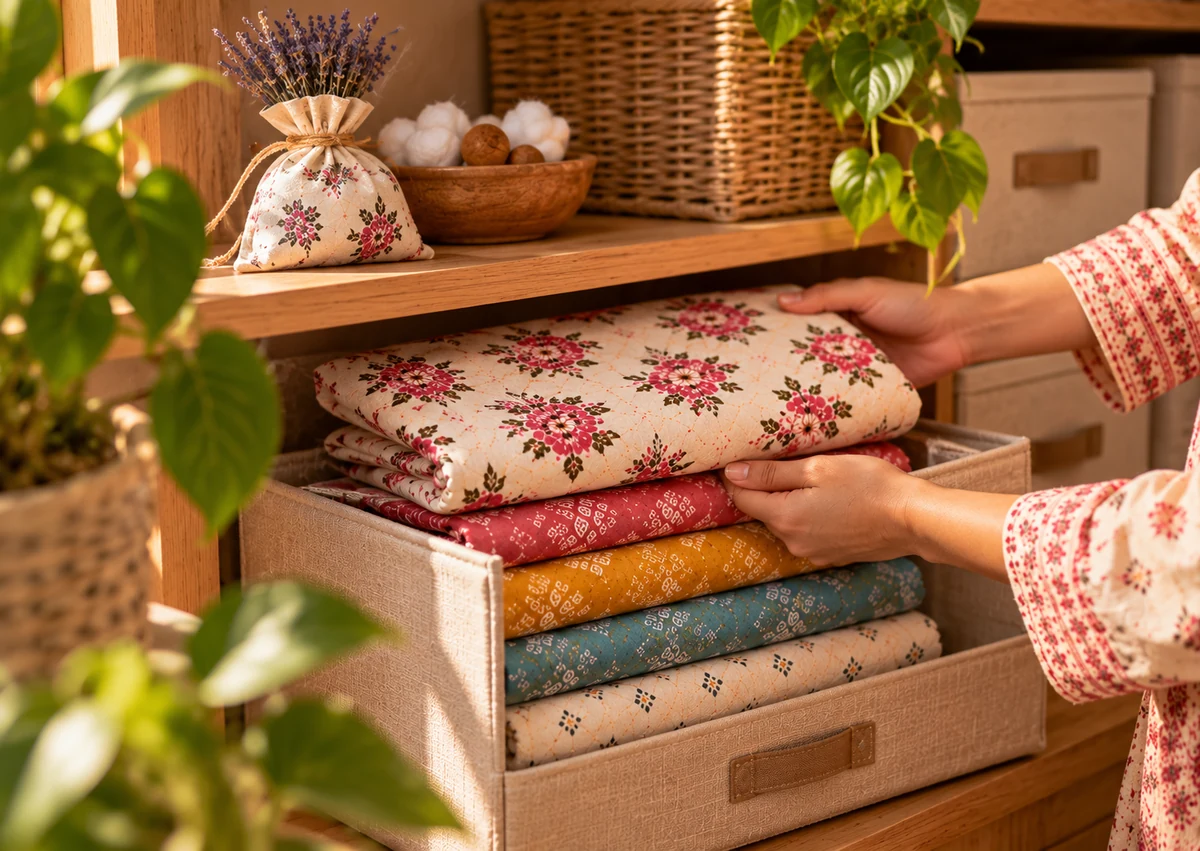
Moisture is the enemy. Keep wardrobes dry, avoid overcrowding delicate pieces and check seasonal clothing before long storage.
Questions customers ask
For many washable cotton and cotton-like unstitched fabrics, a gentle plain-water pre-wash before stitching is useful because the first wash can cause some initial shrinkage or settling. Dry the fabric completely before measuring or cutting. Some cotton fabrics may relax again after drying and ironing.
Wash dark colours separately, use a mild detergent, avoid unnecessary soaking, turn garments inside out where practical, and dry away from harsh direct sunlight. Always follow the product-specific care instructions.
Do not assume so. Silk and silk-blend products can differ significantly in weave, dye, finish and embellishment. Follow the care label or product care instructions; professional dry cleaning may be recommended for some pieces.
Only when their care requirements are compatible. Dupattas frequently use a different fibre, dye, border or finish, so check their care instructions separately.
Store garments only when completely clean and dry, in a cool dry place. Fold delicate or embellished pieces carefully, avoid damp areas, and refold long-stored pieces periodically to reduce permanent fold lines.
Follow the garment’s care instructions and dry washable cotton in a shaded, well-ventilated place. Avoid prolonged exposure to harsh direct sunlight, especially for dark or printed fabrics.
Check the care label before washing. Avoid scrubbing, wringing or applying a hot iron directly to embroidery and embellishments. Pieces with delicate work may need professional cleaning.
Yes. Contact us on WhatsApp or visit our Sikar store, and share the product photo or style code. Ask about the specific fabric before washing, cutting or stitching; its supplied care instructions take priority over this general guide.
Shop with confidence
Explore Kaveri Libas collections and keep this guide handy whenever your wardrobe needs a little extra care.

This Kaveri Libas Care Guide is prepared as general care guidance for the types of fabrics and garments sold by Kaveri Libas. Fibres, blends, dyes, prints, embroidery, finishing, lining and construction can vary from one product to another.
Always follow the care label or care instructions supplied with your specific product. If those instructions differ from this page, the product-specific instructions should be followed. When you are unsure about a delicate, embellished or colour-sensitive item, consider a small hidden-area test or professional fabric care before proceeding.